2️⃣ What Schools Must Prepare Before Choosing an ERP
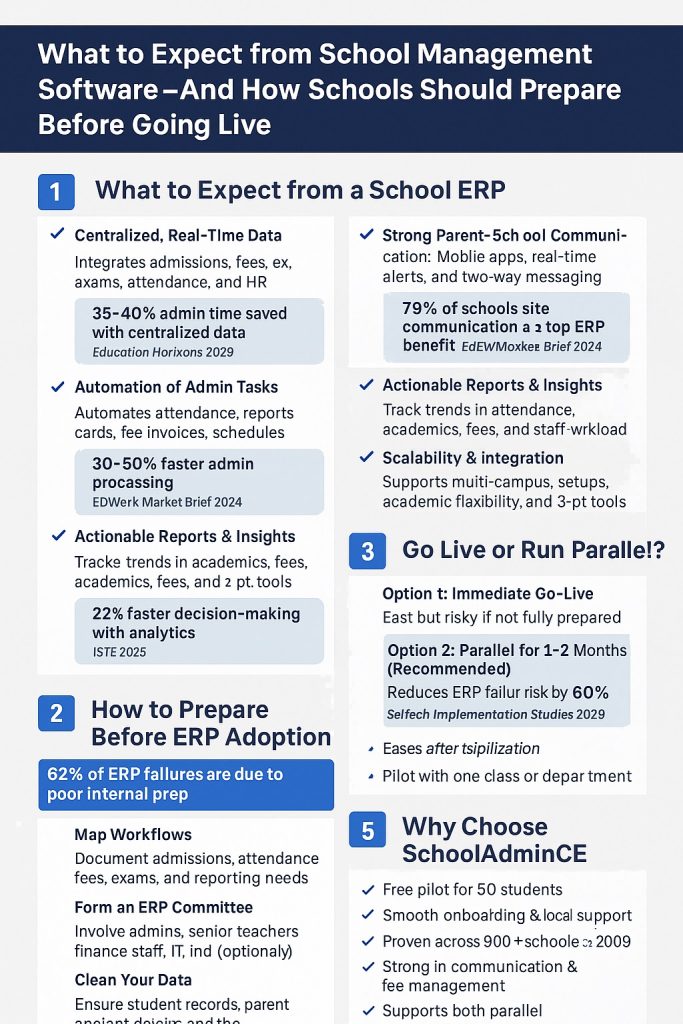
❌ According to a 2024 K-12 EdTech Readiness Study, 62% of failed ERP projects were due to poor internal preparation — not software limitations.
Here’s how to ensure your school is ready:
a) Map Current Academic & Admin Workflows
Before evaluating ERPs, document:
Admission processes
Attendance policies
Fee structures & concession rules
Exam formats & grading styles
Role-based responsibilities
Report requirements (internal, board, government)
b) Form an Internal “ERP Committee”
Involve stakeholders to ensure system compatibility and smoother adoption:
Principal or Head of School
Fee/accounts officer
Senior teachers from each department
IT staff or consultant
(Optional) Parent representative
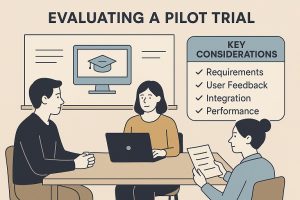
This group will review, test, and validate ERP features during the selection and pilot phase.
c) Clean & Organize Your Data
Data quality = ERP success. Prepare:
Updated student and staff databases
Clean parent contact details
Standardized fee and scholarship records
Historical academic data
Consistent naming conventions
🧹 Tip: Clean data reduces migration errors and saves 20–30% of onboarding time (Source: School CIO Journal, 2024).
d) Set Clear ERP Goals for First 3–6 Months
Define success upfront. Examples:
✅ 100% digital attendance
✅ Reduce fee collection delays by 25%
✅ Generate exam reports within 24 hours
✅ Boost parent portal engagement
e) Prepare Your Team for Digital Change
👩🏫 ISTE reports that early teacher involvement leads to a 70% higher rate of successful tech adoption.
Do this:
Run pre-launch orientation sessions
Offer role-based hands-on training
Set expectations and timelines
Provide ongoing support

Recent Posts
Selecting a school management system is more than just a technology upgrade. It impacts nearly every aspect of school operations — from academics to admin workflows, financial processes, parent communication, and long-term strategic goals.
Yet, many schools underestimate the preparation required to make the right choice and ensure successful adoption.
This guide offers practical insights and research-backed data to help schools:
Understand what a modern School ERP should offer
Prepare their processes, people, and data
Decide between an immediate go-live vs. parallel deployment
Implement smoothly with minimal disruption
1️⃣ What Schools Should Expect from a Modern School Management System
a) Centralized, Accurate, Real-Time Data
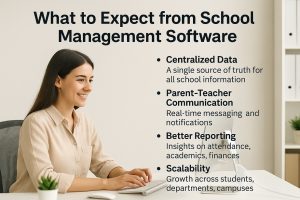
Modern school ERPs unify all core functions — admissions, attendance, fee management, exams, communication, HR — into a single platform.
🔍 Research Insight:
According to a 2023 report by Education Horizons, schools that adopted fully integrated systems experienced a 35–40% reduction in manual administrative workload due to reduced duplication and improved data access.
What to expect:
A single source of truth for all departments
Fewer spreadsheets and manual reconciliations
Role-based dashboards for admins, teachers, students, and parents
Real-time access to student records and operations
b) Seamless Parent–Teacher–School Communication
Strong communication features are one of the most cited indicators of ERP success.
📊 Data Point:
A 2024 survey by EdTech Evidence Exchange found that 79% of schools rated their ERP favorably when it improved parent-teacher communication.
What to expect:
Mobile app + web portal access for all users
Push notifications (attendance, exams, dues, announcements)
Multi-language support for diverse communities
Secure two-way communication logs for transparency
c) Automation of Repetitive Admin Tasks
Automating repetitive tasks allows staff to focus on academic excellence.
⚙️ Stat:
Schools that automate processes like attendance, fee invoicing, and exam reports report a 30–50% increase in administrative efficiency (Source: EdWeek Market Brief, 2024).
Automate tasks such as:
Daily attendance with alerts
Timetable scheduling and conflict checks
Fee reminders, invoices, late fees
Exam result generation and digital report cards
d) Better Reporting & Actionable Insights
Today’s ERP systems go beyond dashboards — they offer real-time analytics to improve school performance.
📈 Research Insight:
A 2023 ISTE study found that schools using analytics-driven ERPs saw a 22% improvement in decision-making speed and 18% better academic tracking outcomes.
Insights to expect:
Attendance trends & absenteeism alerts
Fee collection vs. dues
Student academic performance metrics
Teacher workload analytics
Department-wise performance
e) Scalability & Long-Term Compatibility
A modern ERP must scale with the school’s growth and evolving structures.
🔍 Example:
Platforms like SchoolAdminCE support multi-campus schools, semester systems, and integrations with accounting, transport, biometrics, and LMS platforms.
Your ERP should support:
Growing student population
Multi-campus operations
Semester/yearly academic models
Third-party integrations
Cross-device usability (mobile, desktop, tablets)
3️⃣ Should You Go Live Immediately or Run a Parallel ERP?
Option 1: Immediate Go-Live
Best for:
New schools
Schools with no ERP
Simple workflows
Pros:
Faster transformation
No duplicate work
Quicker learning curve
Cons:
Risky if processes are unclear
Errors can disrupt operations
Option 2: Parallel Implementation (Recommended for Most Schools)
📊 Research shows parallel implementation reduces ERP failure risk by 60% (EdTech Implementation Studies, 2023).
Best for:
Established schools
Migrating from an old ERP
Complex workflows
Schools unsure of readiness
Pros:
Compare old vs. new system
Spot gaps or bugs before full transition
Staff has time to adapt
Cons:
Temporary extra effort
Requires discipline and tracking
✅ Best Practice:
Run parallel for 30–60 days, then fully migrate once confident.
4️⃣ Best Practices for a Smooth ERP Implementation
Start with a pilot section or department
Use a free 50-student trial (like SchoolAdminCE offers)
Assign “Super Users” for each area
Conduct weekly review meetings during rollout
Gather and act on early feedback
Scale gradually after initial success
5️⃣ Why SchoolAdminCE Makes ERP Rollout Easier
🧩 Built with 15+ years of school ERP expertise
✅ Free pilot for up to 50 students
✅ Intuitive onboarding
✅ Ideal for small and large institutions
✅ Strong modules for communication, fees, and reporting
✅ Available in India and Africa with Education board Requirements.
✅ Proven go-live and parallel migration strategies
💬 “SchoolAdminCE was instrumental in digitizing our operations within 60 days — with minimal disruption.” — Principal, Sunrise Public School
🏁 Final Thoughts
Choosing the right school management system is a critical decision — but with proper expectations and preparation, it can dramatically improve school efficiency, staff satisfaction, and student-parent engagement.
✅ Know what to expect from modern ERPs
✅ Prepare data, workflows, and staff early
✅ Choose a launch strategy aligned to your readiness
✅ Test using a free pilot before full-scale rollout
With tools like SchoolAdminCE, schools can digitize at their own pace — and set a foundation for long-term excellence.
📚 Suggested Reading
EdTech Implementation Trends 2024 – EdWeek
Digital Transformation in K-12 Education – ISTE
School ERP Adoption Best Practices – Education Horizons Group
K-12 Technology Readiness Report – EdTech Magazine